
2026-09-24
The sails stopped being a speed setting and started being sails: the yards now catch the wind, back, push the ship astern and turn it.
Sails that work like sails
Each yard group drives the ship by its angle to the wind. Square sails edge-on to the wind give nothing; fore-and-aft sails carry the ship close to the wind, and the two hand over smoothly as the wind draws aft. A backed sail pushes the ship astern, and a ship making sternway answers its rudder the other way round.
The yards also turn the ship. A backed foresail pays the bow off to leeward, and the main and mizzen push the stern, so tacking works the way it did in the age of sail: haul the main as the bow crosses the wind, hold the fore aback until the ship pays off.
A fleet
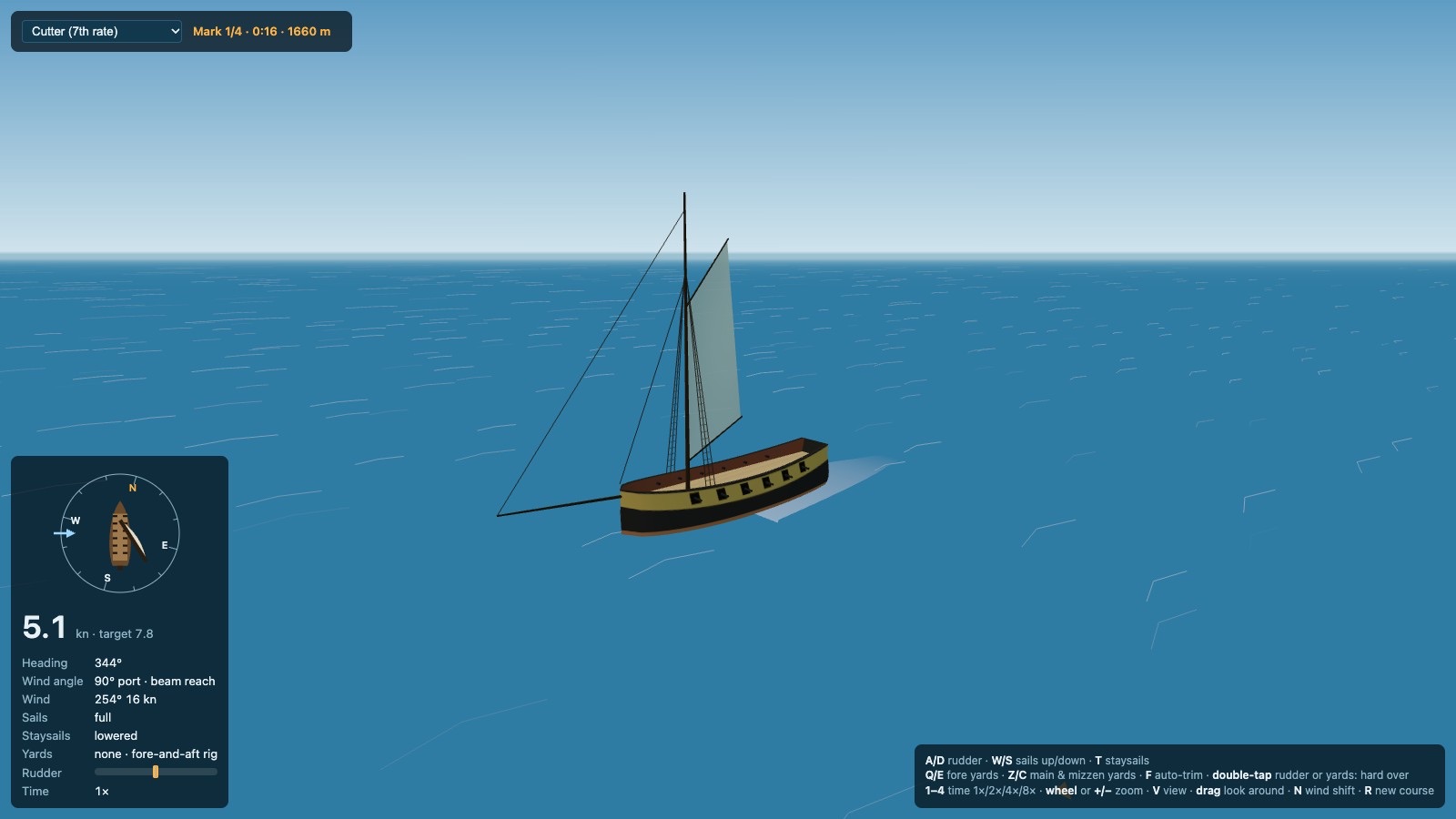
Each rate got its own speed curve, and by breakfast there was a hull for every rate from a first-rate ship of the line down to a cutter. Each had its length, beam and gun decks, with its ports drawn along the side. The brig got two square-rigged masts and a boom mainsail. The cutter is fore-and-aft rigged, with a gaff mainsail and headsails and no yards at all. Every ship now starts stopped with its sails furled, all of them in a line down the wind. Picking a hull takes command of it where it lies, and the ship left behind strikes sail and drifts to a stop.
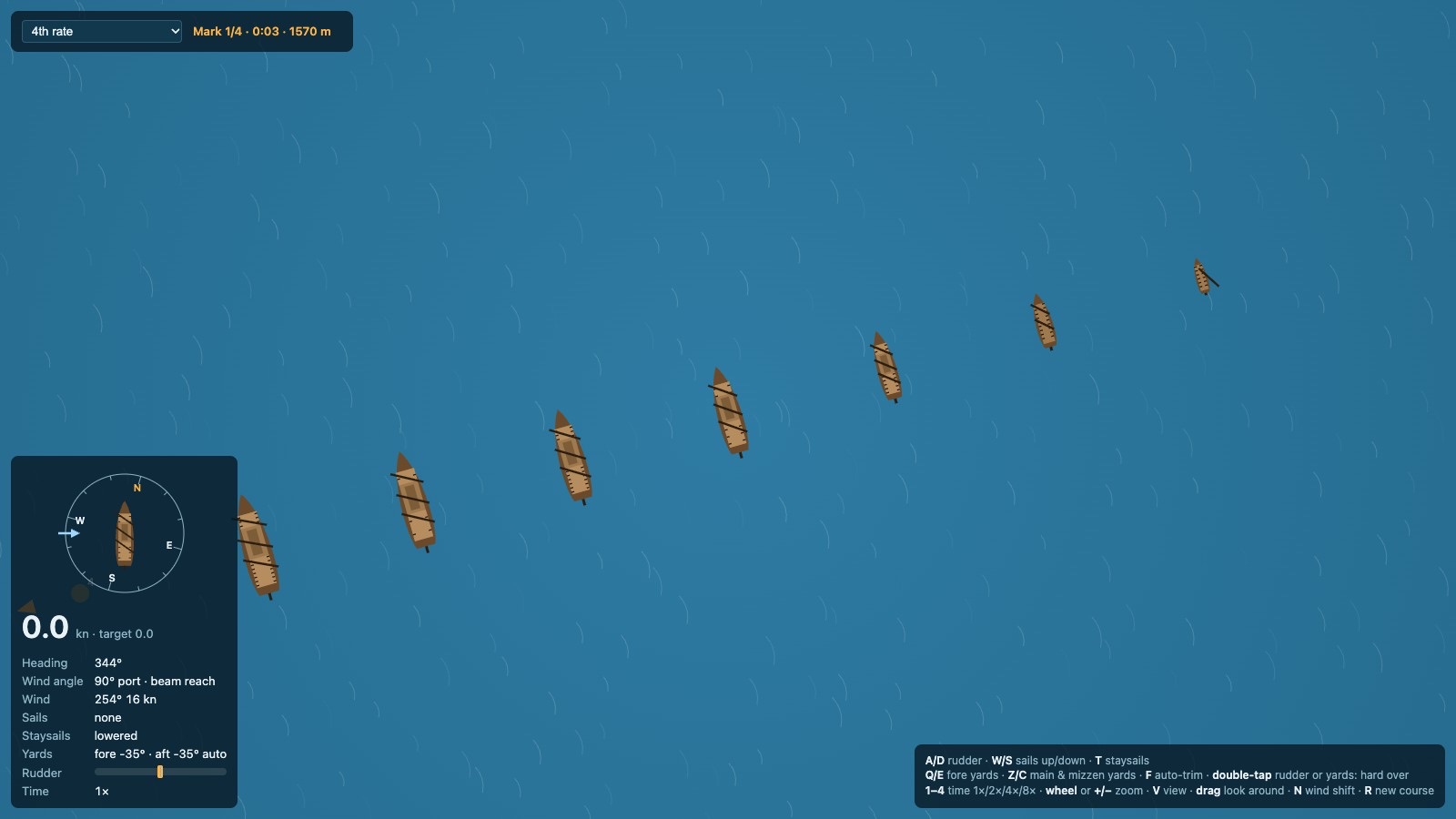
All of this was still the 2D canvas from the first day. The top-down chart above is flat drawing, and so is the chase view below: each hull is a set of flat shapes projected into perspective, with its gun ports painted along the side.
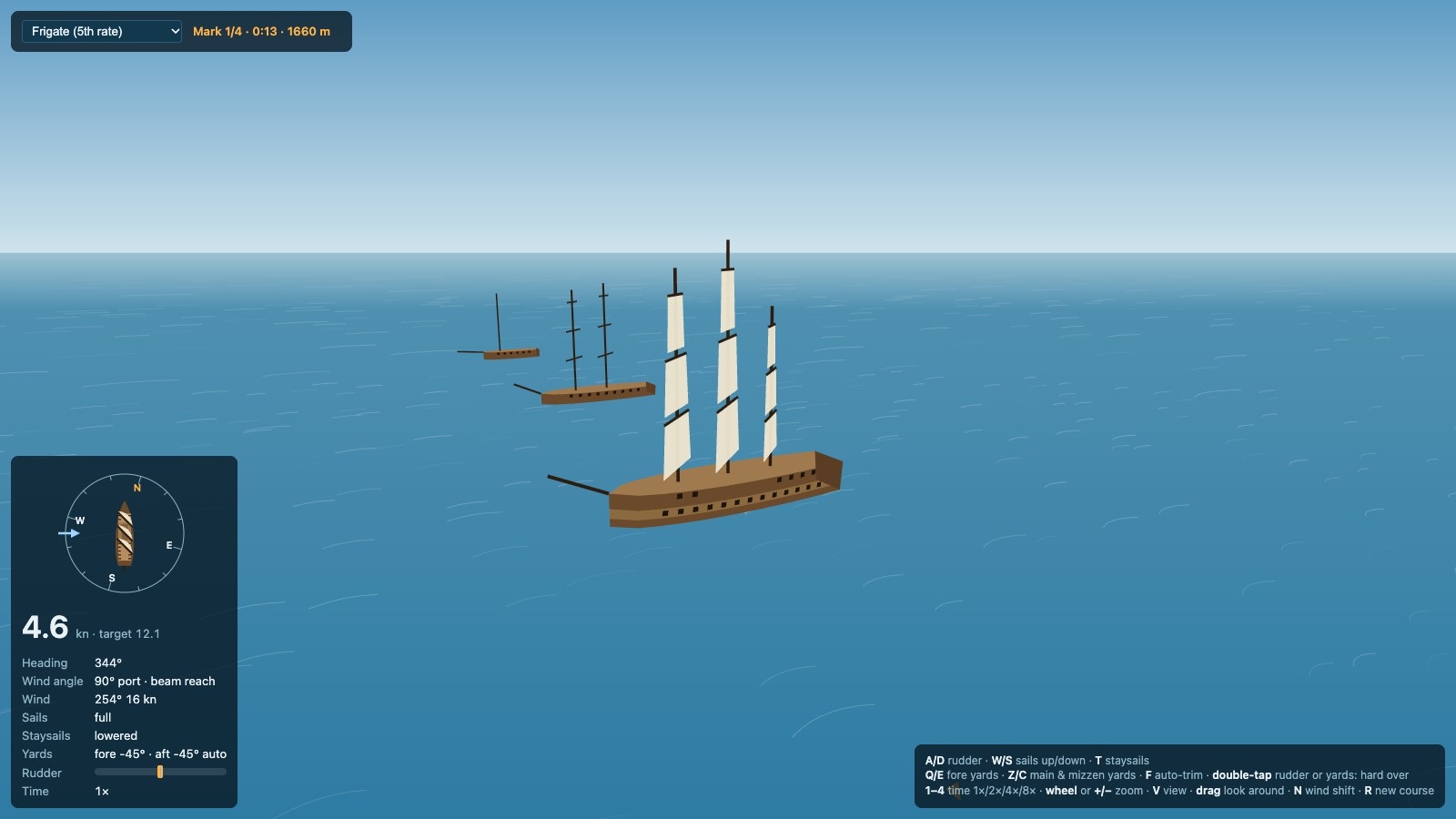
Ships worth looking at
Just after one in the afternoon the chase view moved to three.js, a 3D library that draws with the graphics card through WebGL. It ships with the sim's own files rather than loading from anywhere else. From then on each ship in the chase view is a real 3D model, built in code from numbers, with no modelling program and no image files. The top-down chart did not move: it stayed on the 2D canvas, a press of V away, and the compass rose and the panels stayed flat drawing laid over the 3D view.
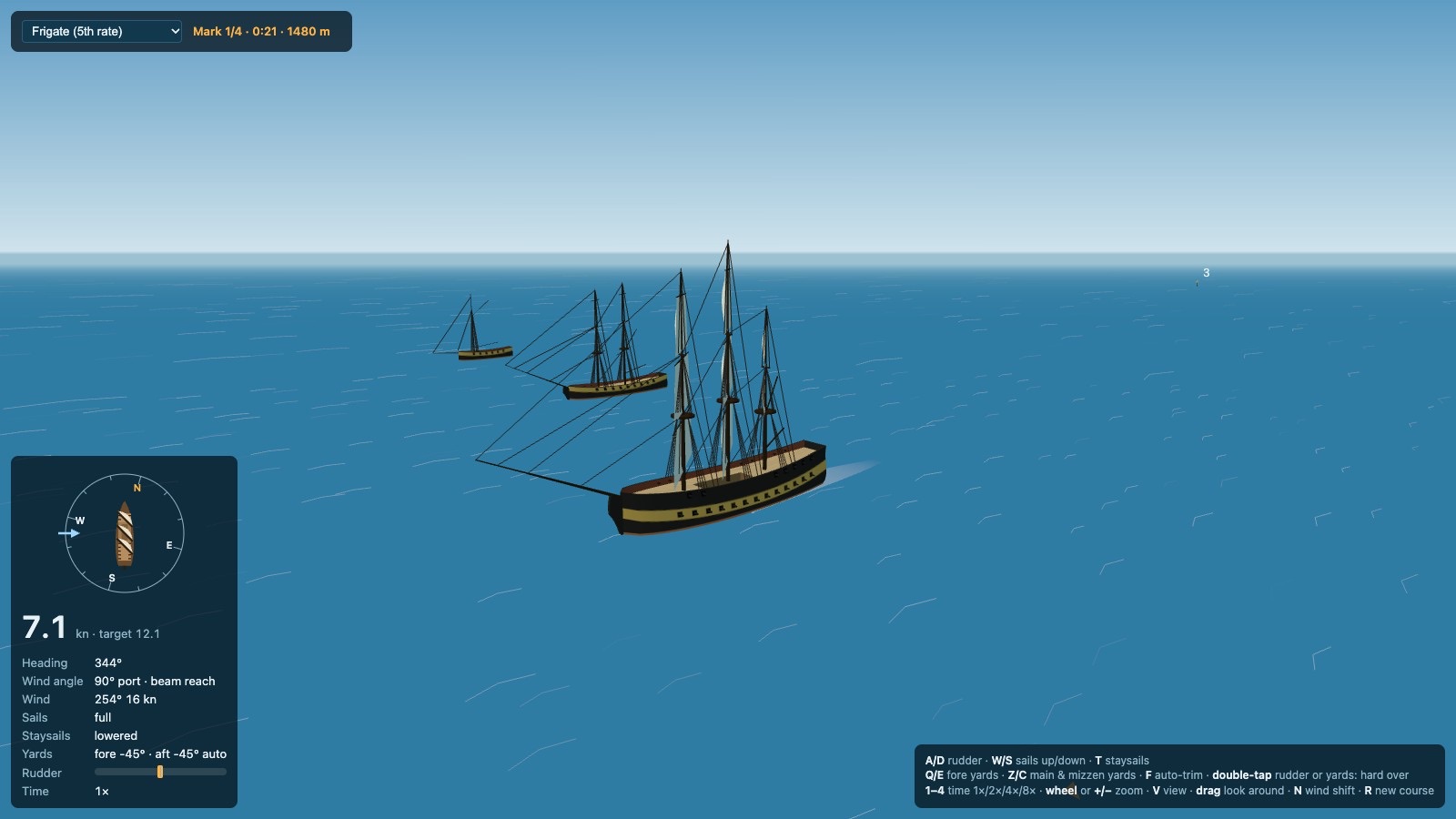
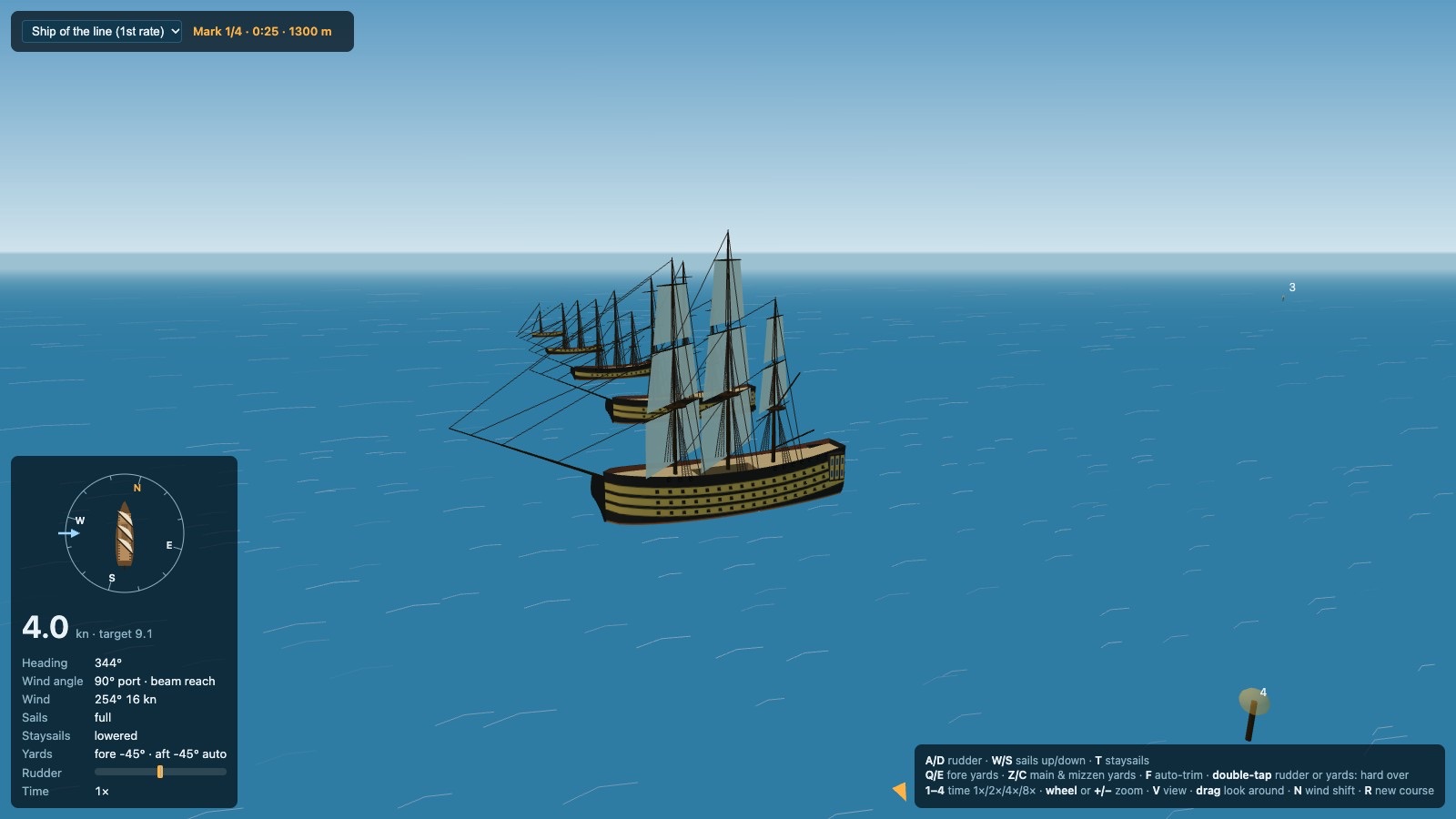
The first 3D step only copied the flat drawing, so nothing looked different. Then the hulls were rebuilt in about an hour and a half, each one made from its own dimensions: a round bilge, tumblehome, a bluff bow and a fine run, a waist open between forecastle and quarterdeck, and a cutwater running up under the bowsprit. Two of the rates, the second and the fourth, were set aside along the way, leaving five hulls: a first rate, a third rate, a frigate, a brig and a cutter. The hulls are painted black with ochre bands along the gun rows, copper below the waterline and stern windows on the transom, and their guns are run out.
The rig followed: masts in three sections, yards in period proportion, sails that belly downwind (and aft when aback), gaff spankers, headsails on their own stays and standing rigging. The ratlines went up last.
By evening the plan for the guns was drafted, smoke and sound included, for the next day. The sim also got its name that night: Quarterdeck.